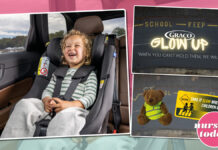

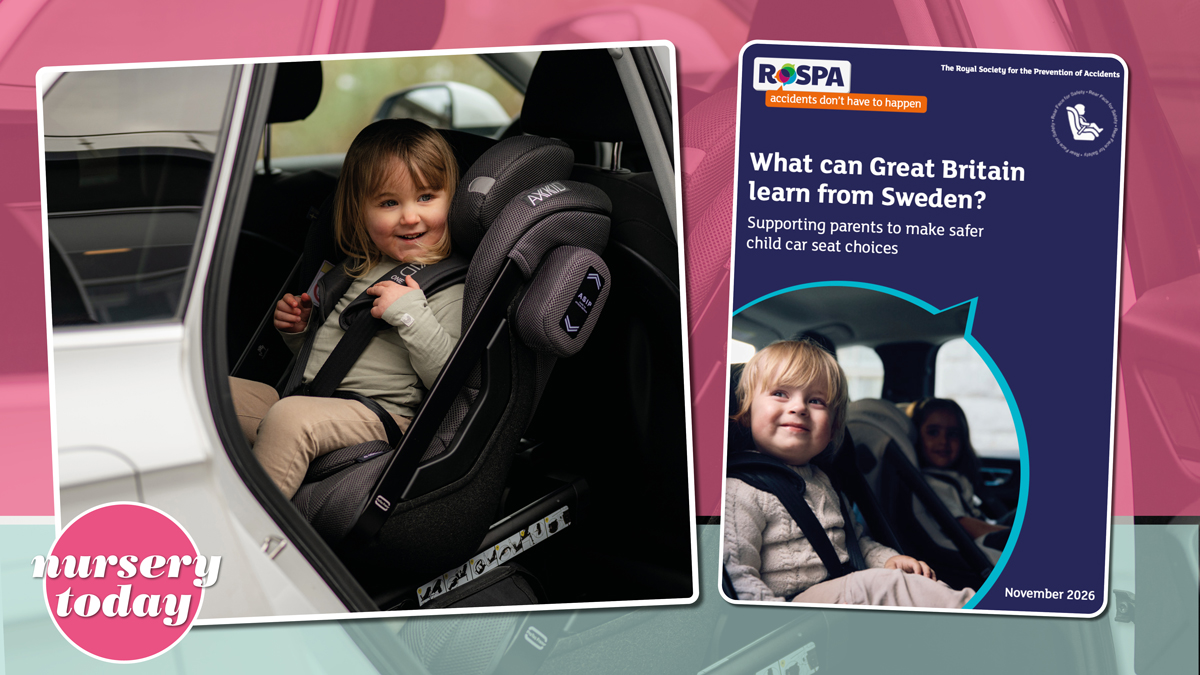
Parents across Great Britain should receive clear, consistent advice to keep children in rear-facing car seats until at least four years old, according to a report published today by the Royal Society for the Prevention of Accidents (RoSPA) during Road Safety Week.
The report, What can Great Britain learn from Sweden? Supporting parents to make safer child car seat choices, examines how Swedish families get advice through child healthcare services, road safety organisations and retailers. It recommends that families in Britain receive clear, consistent advice about keeping children rear-facing, starting in pregnancy and reinforced regularly as their child grows.
In 2025, 495 children under 16 were killed or seriously injured while travelling in cars in Great Britain.
Sweden has one of Europe’s lowest child road death rates. The Swedish Transport Agency says young children in forward-facing car seats face five times the risk of being killed or seriously injured in a crash compared with young children in rear-facing seats. In a frontal crash, a rear-facing seat supports a young child’s head and body together, helping to protect their developing neck and spine.
Rebecca Guy, Senior Policy Manager at RoSPA, said: “Parents want to make the best decision for their child’s safety, but many aren’t aware of the benefits of keeping children rear-facing beyond infancy. This report highlights the importance of making sure families have access to clear, evidence-based information when choosing a car seat. By giving parents the right information at the right time, we can help them make decisions with confidence.”
At 1pm today, Andy MacNae, MP for Rossendale and Darwen, will host a child passenger safety roundtable in Parliament. Dr Maria Klingegård, a traffic safety researcher at Folksam Insurance Group in Sweden and a leading expert in child car seat safety, will share lessons from Sweden. Dr Sarah O’Toole of the RAC Foundation will set out the British context, including the Government’s target to reduce deaths and serious injuries among under-16s on Great Britain’s roads by 70% by 2035.
The roundtable will bring together families, researchers, health visitors, car seat specialists and representatives from national and local organisations. Participants include Folksam, RoSPA, the RAC Foundation, the Road Safety Foundation, Loughborough University, National Highways, the National Roads Policing Coordination Centre, the Child Accident Prevention Trust, Good Egg Safety CIC and Child Seat Safety.
Also taking part are parenting platform Netmums, nursery retailer Natural Baby Shower, the Institute of Health Visiting and Joy Allen, Police and Crime Commissioner for Durham and Darlington. Road Safety GB and councils from Wales, Lancashire, Derbyshire, London, Kent, Suffolk and Hull will also be represented.
Axkid, which helped bring the roundtable together through its Rear Face for Safety campaign, will take part alongside fellow car seat manufacturers BeSafe and Silver Cross.
Sheffield mum Jenny Everson, whose story features in the report, will attend with her mum, Anne. Both were seriously injured and needed surgery after another driver lost control and crashed head-on into their car in December 2023. Jenny’s two-year-old son, Marlo, was travelling in a rear-facing car seat and escaped with cuts and bruises.
Jenny said: “We were told that when the emergency services arrived, they didn’t expect to find anyone alive in the car. My mum and I were both seriously injured, but Marlo escaped with cuts and bruises. An emergency responder told me his rear-facing seat had saved his life.
“Marlo is five now and he still travels rear-facing. I feel it’s my duty to tell other parents what happened so they can learn from it. I’ve spoken to so many people who had no idea that rear-facing seats were so much safer.”
Rebecca Morris, an independent road safety communications specialist and the report’s author, said: “As a mum of two, this is personal for me. I was already working in road safety when I chose car seats for my own children, yet I didn’t know about the benefits of keeping them rear-facing beyond infancy. One of the most interesting parts of writing this report was speaking to parents in Britain and Sweden about where they got their advice, who they trusted and how they decided when to turn their child forward-facing.
“Parents don’t know what they don’t know. They shouldn’t have to research car seat safety extensively to discover the benefits of keeping children rear-facing. Clear, consistent advice should reach them from pregnancy onwards and be reinforced as their child grows. I hope this report helps make rear-facing until at least four the norm in Britain, as it is in Sweden.”
The report makes eight recommendations, including consistent advice to keep children rear-facing until at least four, preferably longer within the seat’s height and weight limits. It also calls for clearer advice on government and NHS websites and through maternity and health visiting services, consistent training standards for retailers, easier access to fitting checks and trials of affordable hire schemes for larger rear-facing seats. Better crash data would help researchers understand which seats children were using, which way they faced and how they were fitted.