Sweden has long been recognised as a world leader in child road safety, with decades of investment in education, legislation and innovation helping to dramatically reduce child fatalities. However, new research presented by Axkid suggests awareness of best practice car seat guidance may be slipping among today’s Swedish parents, raising concerns that children could be put at unnecessary risk by transitioning to forward-facing travel too soon.
Sweden achieved a historic road safety milestone in 2021 when not a single child under the age of 15 was killed in a passenger car on Swedish roads. Since the 1960s and 1970s, child traffic fatalities in the country have fallen by 92%, largely thanks to the widespread adoption of rear-facing travel and rigorous safety standards.
Despite this success, researchers are warning that awareness of child car seat recommendations is declining.
“It is an incredible achievement, but we must remember that new generations of parents need access to this knowledge,” said Anna Carlsson, Researcher at Chalmers Industriteknik. “We cannot take awareness for granted. Continuous education is essential if we want to maintain the safety leadership Sweden has built over many decades.”
New survey findings from Axkid and Volvia reveal a growing knowledge gap among parents. In 2025, 15% of respondents said they were unfamiliar with current child car seat recommendations, compared with just 5% in 2020. Furthermore, only 38% knew the earliest recommended age at which a child should move to a forward-facing car seat.
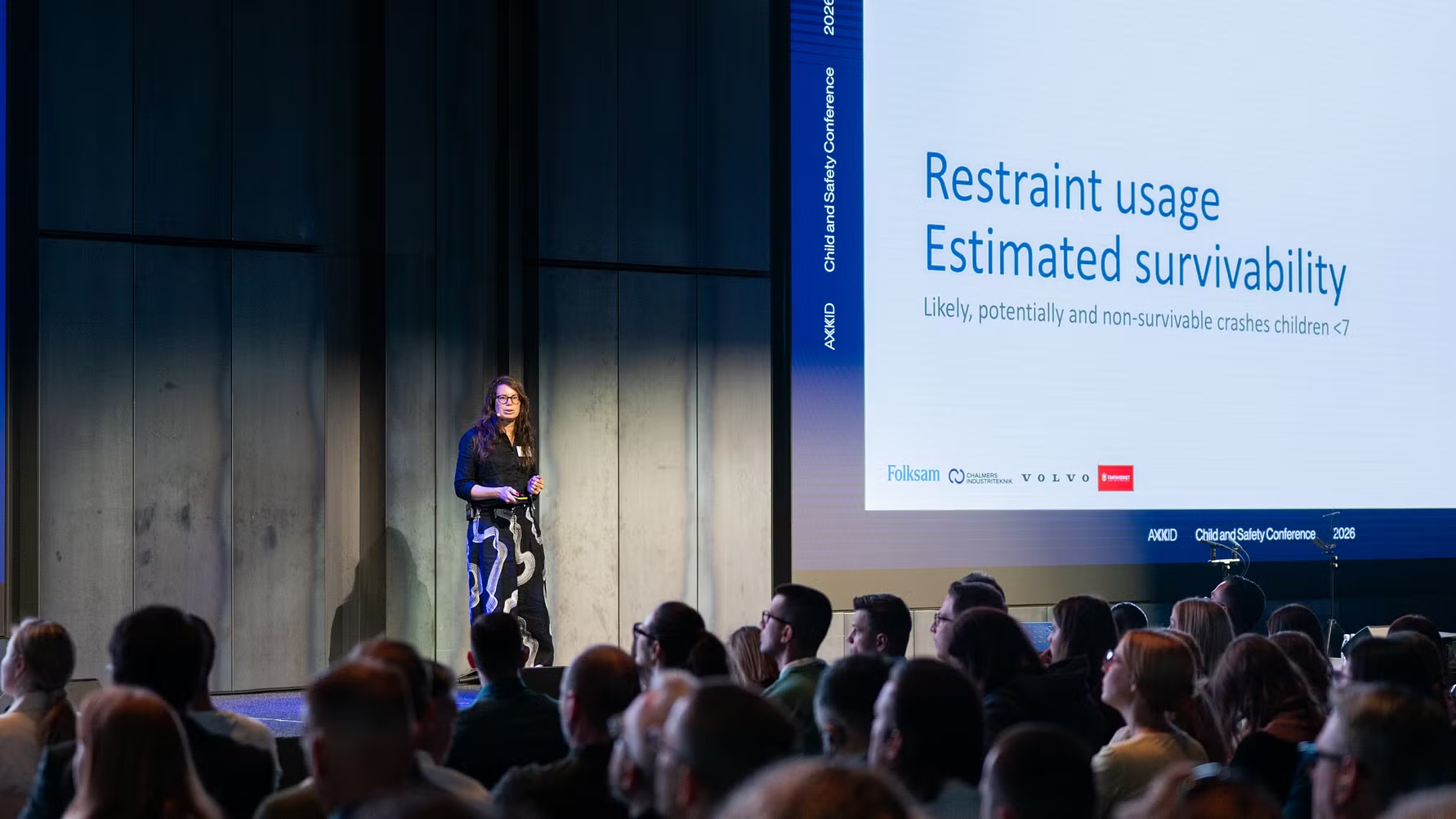
These findings were presented at the Child and Safety Conference, hosted by Axkid at World of Volvo in Gothenburg, where experts from research, healthcare and industry gathered to discuss the future of child road safety.
Among the speakers was Maria Klingegård, Traffic Safety Researcher at Folksam, who presented research examining fatal crashes involving children.
“We see that an alarmingly high proportion of children involved in fatal crashes were either completely unrestrained or not travelling in rear-facing car seats,” she said. “Our analysis shows that approximately half of the children aged 0–3 who lost their lives could have survived if they had been travelling rear-facing. Keeping children rear-facing for as long as possible remains the single most important factor in protecting children in vehicles.”
The research, conducted by Folksam, Chalmers Industriteknik and Volvo Cars, analysed fatal crashes involving children under 15 in Sweden between 1992 and 2024. A detailed review of incidents involving children aged 0–6 further examined the impact rear-facing car seats can have on survival outcomes in severe collisions.
Anton Wall, Vice President and Commercial Director at Axkid, emphasised the importance of collaboration across the industry.
“We want to take responsibility for child safety across the entire ecosystem. It is not enough to focus solely on our own product category. By bringing together leading experts and researchers from across the industry, we can share insights and strengthen our collective efforts to protect children on the roads.”
According to Axkid, children should remain rear-facing for as long as possible, ideally up to seven years of age. Safety considerations continue beyond this stage, with Anna Carlsson also highlighting the importance of using a high-back booster seat or booster cushion until around 10 to 12 years old, when a child’s body is better able to interact safely with an adult seatbelt.
The findings serve as an important reminder that while vehicle and car seat technology continue to advance, education remains one of the most effective tools in helping keep young passengers safe.